


Dat One: Truck Load Board
3.91.08K Reviews
App Specs
- Version
- 1.86.0.2155
- Updated On
- License
- Free
- Downloads
- 1,000,000+
- Developer
- DAT Solutions
- Categories
- Business
- Platform
- Android, iOS
Screenshots
 Analysis by AppCompare
When I first opened Dat One: Truck Load Board, I approached it with a very practical question: can it help me move from “I need a load” to a workable freight option without constantly switching between tools? That is the right way to judge this app. It is not a general business organizer or a polished fleet-management suite. It is a focused business app from DAT Solutions for people who search freight, compare lanes, and need rate context while making transportation decisions.
The app is free, rated for Everyone, and available for devices running Android 7.0 or later. Its store presence is substantial, with more than a million installs, a 3.9 average from roughly four thousand ratings, and about a thousand written reviews. Those figures suggest a product that is widely used but not universally loved, which matches my impression: the core idea is useful, while the quality of the experience depends heavily on how often you work with freight and how much information you need to verify before committing.
From an empty schedule to a candidate load
The most realistic starting condition is familiar to an owner-operator or small carrier: the truck is available, the next destination is known, and sitting idle is expensive. In that situation, I would not open this app expecting it to make the entire business decision for me. I would use it as a working surface for finding possible freight, checking lanes, and narrowing down what deserves a phone call or a closer look.
The first useful habit is to begin with the lane rather than browsing aimlessly. Think about the truck’s current location, its preferred direction, and the next area where you want it to finish. That approach makes the board more practical because a load is not automatically good just because it is available. A shipment that pulls the truck away from a strong outbound market can create a poor result after fuel, empty miles, tolls, and waiting time are considered.
I also found that the app makes more sense when treated as part of a short decision loop: search, compare, verify, contact, and record the outcome. It is easy to focus on the search part and forget the other steps. The board can help surface opportunities, but it cannot replace the judgment needed to decide whether a particular pickup time, destination, commodity, or rate fits the truck and the driver.
Searching with a purpose
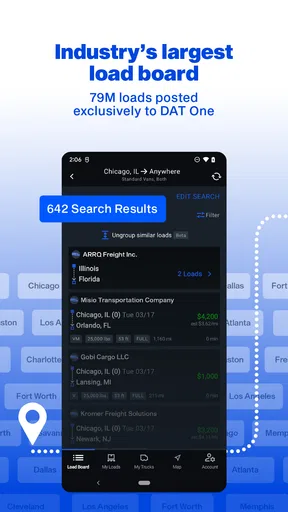
My preferred workflow would be to set the origin around the truck’s actual position, then adjust the destination area according to the next planned move. I would avoid making the search so broad that every result looks equally plausible. A wide search may feel productive, but it can produce a long list of freight that is expensive to reach or difficult to combine with the following trip.
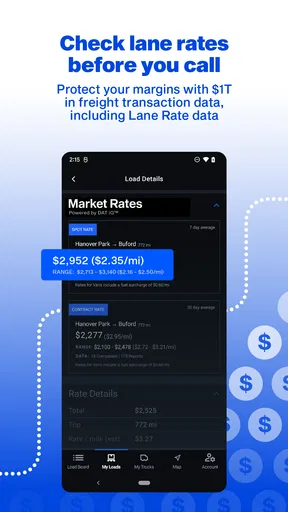
Once possible loads appear, I would compare more than the headline rate. The lane matters because two loads with similar pay can produce very different outcomes when one requires a long empty run or leaves the truck in a weak market. This is where the app’s freight-rate and lane focus becomes more valuable than a simple classified listing. It gives the search a market-oriented frame instead of treating every posting as an isolated offer.
Worth Reading Before You Choose

EA SPORTS FC Mobile 26 Is a Bigger Football Game, but It Takes Time

Flipboard Shows What News Apps Must Do Beyond the Feed

Switching to Android Auto Means Rethinking Your Driving Routine

Google Calendar Makes a Crowded Week Easier to Manage

Ludo King Makes the Most of the Minutes Between Plans

Baby Panda World Brings Quick Play to Modern Phones, but Its Game Library Feels Busy
A useful non-obvious tactic is to search the return direction before accepting the outbound load. I would look at where the truck is likely to end up, then see whether the next lane offers reasonable possibilities. This does not guarantee a reload, but it changes the decision from “Can I take this shipment?” to “What does taking this shipment make possible afterward?” For a small operation, that second question can matter more than a modest difference in the first rate.
Reading a result without rushing
When I find a promising entry, I would slow down and treat it as a lead rather than a finished booking. The practical questions come next: Is the pickup compatible with the driver’s schedule? Is the equipment appropriate? Does the destination fit the planned route? Are the timing and distance sensible once the truck reaches the origin? The app can help organize the search, but the final answer still depends on details that need to be confirmed directly.
This is also where realistic expectations matter. A load board is not the same thing as a dispatch service. It can reduce the time spent looking for freight, but it does not remove the need to negotiate, confirm instructions, check documents, or decide whether the counterparty is suitable for your business. I would never treat a listing’s presence as proof that the load is still available or that every operational detail is settled.
The strongest workflow is therefore selective. I would shortlist a few candidates, compare their lane logic and rate context, and contact only the ones that fit the truck. That is faster than calling every result and safer than choosing the first attractive number. It also prevents the app from becoming an endless scrolling tool.
Where the handoff begins
The key handoff happens when information moves from the screen to a conversation. The person searching may be an owner-operator, while the person calling may be a dispatcher, office employee, or broker contact. At that moment, the app stops being the whole workflow and becomes the starting point for verification.
I would keep a simple note beside the search process with the load’s origin, destination, timing, equipment requirement, and the questions still unanswered. That small discipline is important because load boards encourage quick comparisons, while transportation work punishes forgotten details. A candidate that looked excellent can become unusable when the pickup window conflicts with the driver’s hours or when the destination creates an awkward next move.
For a small carrier, the handoff can also happen internally. One person may search while another speaks with the contact and the driver waits for a decision. In that setting, the app is most useful when everyone understands that the displayed information is a starting point. I would not forward a result with only a rate attached; I would pass along the lane, timing, and the reason it appears worth checking.
This is one of the app’s practical strengths compared with relying only on personal contacts. A private network can be excellent when it produces repeat business, but it may not show enough alternatives when a truck is in an unfamiliar area. Dat One gives the search process a broader place to begin. The trade-off is that a broader marketplace requires more filtering and more verification from the user.
What the complete trip looks like in practice
Imagine a driver has finished a delivery and now needs freight heading generally toward the next preferred region. I would open the app, search from the current area, and avoid judging the first result by pay alone. I would compare the destination with the truck’s larger plan, inspect the lane context, and identify whether the pickup is close enough to make sense.
Next, I would choose the strongest candidates and contact the relevant party to confirm that the shipment is still workable. This is the moment when the app’s value is measured by time saved, not by whether it completes the transaction automatically. If the search helps me reach a useful shortlist quickly, it has done its job. If I still need to repeat the same search across several unrelated sources because the available results do not fit, the advantage becomes smaller.
After confirmation, the information needs to move to the person executing the trip. The driver needs clear pickup and delivery details, while the office may need to track the agreed terms and any changes. I would use the app for discovery and comparison, then rely on the normal communication and record-keeping process for execution. That division of labor is sensible, but it means the app should not be mistaken for a complete transportation operating system.
The outcome I would want is not simply “a load found.” It is a load that fits the truck’s position, schedule, equipment, and next move, with enough confidence that the handoff does not create avoidable confusion. A board can support that outcome, but only when the user keeps the full route in mind.
How it compares with familiar alternatives
Compared with calling a small circle of regular contacts, the app offers a broader starting point for finding freight and checking lanes. That is especially helpful when a truck is outside its usual territory or when the normal contacts do not have a suitable option. The disadvantage is that personal relationships often carry context that a listing cannot: preferred communication habits, known reliability, and an understanding of how a particular customer operates.
Compared with a general spreadsheet or notes app, Dat One is much better suited to freight discovery because the information is organized around loads, rates, and lanes rather than manually entered rows. A spreadsheet can still be better for tracking the whole trip, calculating operating costs, or maintaining a private history of contacts. I would not replace a proper business record with the board alone.
Compared with a full dispatch or fleet-management platform, this app is more focused. That focus can be an advantage when the immediate need is searching for freight rather than managing every part of the operation. It can also be a limitation for a growing carrier that wants integrated driver communication, accounting, maintenance, document handling, and workflow automation in one place.
The best role for it is therefore clear: use it as a freight-search and market-reference tool, not as the only system behind the business. That distinction prevents disappointment and makes the app easier to evaluate fairly.
Three habits that make the search more useful
- Check the next move before accepting the current one. A load can look attractive in isolation and still leave the truck in a difficult area. Searching the likely follow-up lane helps expose that trade-off early.
- Separate discovery from confirmation. Use the board to build a shortlist, then verify availability, timing, equipment, and instructions through the appropriate contact. This avoids treating a search result as a guaranteed assignment.
- Compare total positioning, not just the displayed amount. Empty travel, waiting, and the quality of the destination market can change the real value of a shipment. The lane view is most helpful when it supports that broader calculation.
These habits also explain why two users can have very different experiences. Someone who searches narrowly, checks the next move, and confirms details may find the app efficient. Someone who expects a one-tap booking experience may find the handoffs tedious.
Where the flow breaks down
The biggest friction is that the app does not eliminate the messy parts of freight work. Results still need interpretation, contacts still need to be reached, and operational details still need confirmation. If you are new to trucking or unfamiliar with lane economics, the amount of judgment required may be greater than expected. The board can show possibilities, but it cannot teach you whether a particular trip is financially sensible for your equipment and business.
Another limitation is the risk of information overload. A large search area can create too many options, while a narrow area can leave you with little to evaluate. I would rather spend time refining the search and comparing a small group than repeatedly refreshing without a clear direction. The app rewards users who already have a plan for what they are trying to accomplish.
There is also a human handoff problem. If the person searching does not pass along the full context, the driver may receive an incomplete picture of the trip. That is not necessarily an app defect, but it is a real workflow weakness. A load board can make discovery faster while still leaving communication quality entirely in the hands of the business.
I would skip this app if I rarely need to search for outside freight, already have dependable direct customers, or want a single platform for dispatch, accounting, and fleet administration. In those cases, a specialized internal system or a broader fleet-management product may fit better. I would also avoid relying on it as the sole source of truth for a booked load.
Device support, cost, and day-to-day fit
Dat One is listed as a free business app, which makes it easy to test without adding a purchase decision to the workflow. Its current version is 1.86.0.2155, and the Android requirement reaches back to version 7.0, so it is accessible on many older Android devices still used in working vehicles. That broad compatibility is practical, although the experience will naturally depend on the phone, connection, and conditions in which the driver is working.
The Everyone content rating is appropriate for a freight-search tool, but that does not mean every user will find it simple. The real learning curve is not about age or technical complexity; it is about understanding lanes, positioning, rate context, and the difference between a lead and a confirmed move. I would give a new user time to build a repeatable search routine rather than judging the app after one hurried attempt.
Its 3.9 average indicates a mixed but generally usable reception. I read that as a reason to approach it with practical expectations. The app’s usefulness is strongest when it supports an existing transportation workflow and weakest when someone expects it to replace the people, calls, calculations, and records that complete the workflow.
My final take for carriers and drivers
After looking at the complete path from an open truck to a possible completed move, I see Dat One as a focused tool with a sensible place in a carrier’s routine. I would recommend it to owner-operators, small fleets, and dispatchers who need a wider freight search, want lane and rate context, and are comfortable doing the verification work that follows a promising result.
I would not describe it as a magic shortcut. Its real strength is helping turn an uncertain starting point into a more organized shortlist. Its real weakness is that the flow still breaks at the exact points where transportation work becomes personal and operational: confirmation, negotiation, handoff, scheduling, and follow-through.
My recommendation is to use Dat One as the discovery layer in a larger workflow. Search with a destination strategy, compare the next move, pass complete information to the driver or office, and confirm every important detail before treating a result as real. Used that way, the free app can be a useful companion for finding freight without pretending to be the entire business.
Pros
- Focused load board for truckers and carriers
- Helps find freight opportunities in one dedicated platform
- Useful for comparing available loads in a single feed
- Can support faster dispatch and trip planning
- Designed around trucking-specific workflows and terminology
Cons
- Load availability may vary by location and time
- Some features may require account registration or verification
- Smaller coverage than major nationwide freight marketplaces
- Results can be competitive
- especially for popular routes
- Requires reliable mobile data while working on the road
FAQs for Dat One: Truck Load Board
What is Dat One: Truck Load Board used for?
Dat One: Truck Load Board is designed for carriers, owner-operators, and freight brokers who need to find and manage available truck loads. The app provides access to load listings, allowing users to search by origin, destination, equipment type, and other criteria. It can help simplify trip planning, reduce empty miles, and keep freight opportunities accessible while working from a mobile device.
Who can use Dat One: Truck Load Board?
The application is primarily intended for professional transportation users, including trucking companies, independent drivers, dispatchers, and freight brokers. Some features may require an active DAT account or a specific subscription, so it is not necessarily aimed at casual users. Before downloading, carriers should confirm that their account type and operating region are supported by the available mobile services.
Does Dat One: Truck Load Board require a paid subscription?
Access to a load board platform such as Dat One generally depends on an account, plan, or subscription arranged through DAT. The app itself may be free to download, but important functions and complete load information can require paid access or valid login credentials. Users should review current pricing, trial conditions, and included features before relying on it for regular business operations.
What information can I search for in the app?
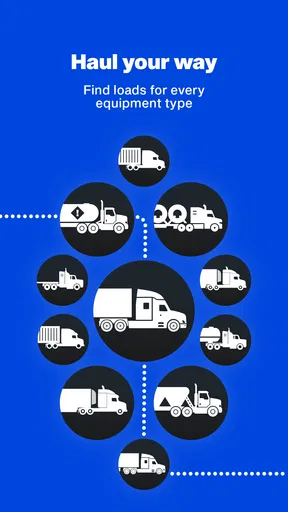
Dat One: Truck Load Board allows transportation professionals to narrow freight searches using practical details such as pickup and delivery locations, dates, equipment requirements, and lane preferences. Depending on the account and listing, users may also review broker information, load details, and contact options. Search results can vary by market, location, timing, and the quality of information provided by the poster.
Is Dat One: Truck Load Board reliable for booking freight?
The app can be a useful tool for discovering freight, comparing opportunities, and contacting brokers, but users should still verify every load independently before accepting it. Confirm the broker’s identity, rate confirmation, pickup details, commodity, payment terms, and any special requirements. Availability and listing accuracy can change quickly, so the application should support—not replace—careful professional due diligence.


